
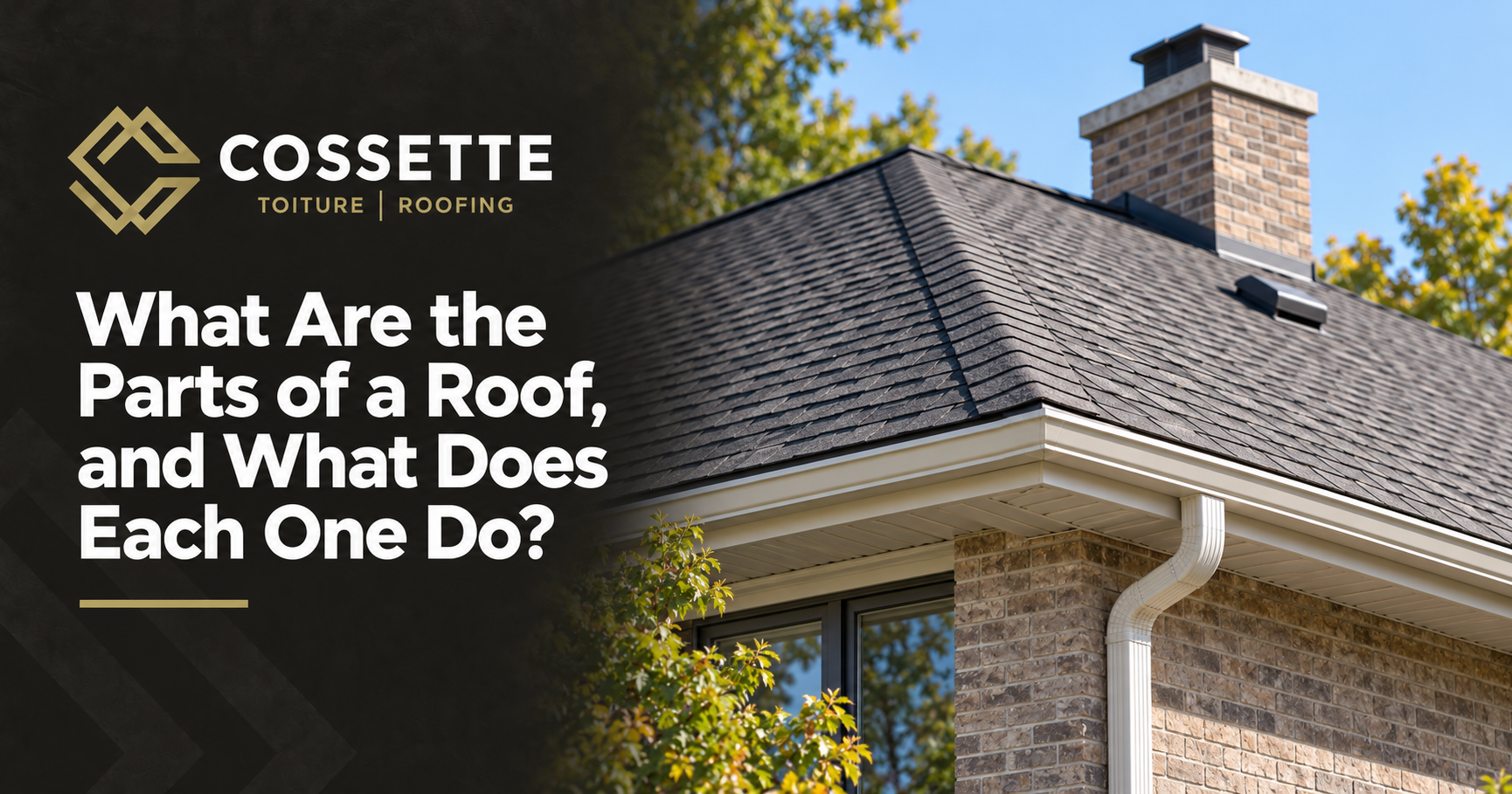
| Quick Answer: A sloped roof is a system: the decking forms the base, the underlayment and eaves membrane add waterproof backup, and the shingles or metal shed water. Flashing, valleys and the drip edge seal the weak spots, while soffit and roof vents move air through the attic. The fascia and gutters manage water at the roof edge and carry it away from the house. |
When a roofer says your “flashing is lifting” or your “soffits are blocked,” it helps to know what they mean. A quote is much easier to compare, and a repair much easier to understand, when you can picture each part of the roof and what it does. This guide breaks a typical Quebec roof into its main parts, from the structure up to the trim, and explains in plain language why each one matters in a climate with heavy snow and freeze-thaw cycles.
What Holds the Roof Up?
The roof’s frame is made of rafters or trusses, the sloped wooden members that carry the weight of the roof and the snow on it. On top of the frame sits the decking, also called sheathing. CAA-Quebec’s guide to the parts of a roof describes the decking as the layer that closes and reinforces the roof structure and provides a nailbed for the shingles.
Decking is usually plywood or similar panels. When it gets wet over and over, it can soften and rot. During a roof replacement, a roofer checks the decking and replaces damaged sections so the new roof has a solid base.
This is not just theory. In a Google review on Cossette’s website, a homeowner in Aylmer wrote that their roof “not only needed new shingles but additional panels of plywood had to be installed to strengthen the original deck.” That kind of problem only shows up when a roofer looks below the surface.
What Are the Waterproof Layers Under the Shingles?
Shingles are not the only protection against water. Two layers sit underneath them:
- Underlayment: a membrane laid over the whole deck. It protects the decking from the weather and acts as a backup if water gets past the shingles.
- Eaves membrane: a self-adhering waterproof membrane installed along the lower edge of the roof. Its job is to stop water infiltration caused by ice dams in winter, which is why it is so important in Gatineau and Ottawa.
These layers are hidden once the roof is finished, so ask your roofer what will be installed and where. They make a big difference in how the roof handles ice and meltwater.
What Does the Roof Covering Do?
The roof covering is the outer layer that sheds rain and snow and gives the house its look. Common roof coverings on homes in the Outaouais include:
- Asphalt shingles: architectural asphalt shingles, which Cossette installs with a lifetime limited warranty.
- Metal roofing: pre-painted galvanized steel in shingle or sheet formats, which sheds snow well.
- Specialty shingles: cedar, slate and recycled rubber, chosen for their look or durability.
- Elastomeric membrane: used on flat and low-slope roofs, where water drains slowly and shingles would leak.
Which Parts Keep Water Out at the Weak Spots?
Most leaks start where the roof surface is interrupted, not in the middle of an open slope. These parts protect those weak spots:
- Flashing: metal pieces that seal the joints around chimneys, skylights, plumbing vents and walls, so water flowing near those openings cannot get in.
- Valleys: the inside corners where two slopes meet. Valleys carry a lot of water and are covered with flashing or a membrane to keep them watertight.
- Saddle: a small peaked structure behind a chimney that diverts water around it instead of letting it pool.
- Drip edge: metal trim along the roof edge that directs water into the gutter and away from the fascia.
- Caulking: sealant around penetrations that must be renewed as it ages and cracks.
Cossette’s residential service includes caulking renewal around chimneys, plumbing vents and skylights, along with flashing repair.
How Does Air Move Through the Roof?
A healthy roof breathes. Outside air enters through the soffits, the perforated panels under the eaves, then flows up along the underside of the roof and leaves through roof vents near the ridge. Deflectors, sometimes called baffles, keep the insulation from blocking that airflow near the soffits.
This airflow keeps the attic cool and dry. In summer it lets heat escape. In winter it helps remove moisture and keeps the roof surface cold, which reduces ice dams. When airflow is poor, moisture and frost can build up and shorten the life of the decking and shingles. Our guide on attic ventilation and why it matters in Gatineau explains this in more detail.
What Do the Fascia and Gutters Do?
The fascia is the long board that runs along the edge of the roof, just below the shingles. It closes off the ends of the rafters, gives the roof edge a finished look, and holds the gutters. When water runs behind a gutter instead of into it, the fascia is often the first part to rot.
Gutters, also called eavestroughs, collect water from the roof and carry it to downspouts, which send it away from the foundation. Cossette installs seamless aluminum gutters, roll-formed on site to the exact length of each run, with downspouts sized for the amount of water the roof sheds.
What Are the Main Parts of a Flat Roof?
Flat and low-slope roofs work differently from sloped roofs, so they have some parts of their own. Water drains slowly, which means every part has to keep standing water out. The main parts are:
- Membrane: the waterproof layer, such as elastomeric (SBS modified bitumen) or TPO, which covers the whole roof surface.
- Insulation: boards under the membrane that keep heat in the building. Wet insulation loses its value and can lead to rot below.
- Drains and scuppers: openings that carry water off the roof. When leaves or ice block them, water ponds on the surface.
- Flashing at walls and penetrations: seals where the membrane meets walls, parapets, vents and rooftop equipment.
- Roof ventilators: vents that let moisture escape from under the roof. On commercial buildings, Cossette checks whether ventilators work properly and whether there are enough of them for the building’s size.
Most flat roof leaks start at seams, flashing or blocked drains, so those are the parts to watch after storms and every spring and fall.
Why Does It Help to Know the Parts of Your Roof?
Knowing the parts helps you understand quotes and spot problems early. If two roofing quotes list different materials, you can ask why one includes an eaves membrane or new flashing and the other does not. If you see staining on the fascia, sagging gutters or peeling soffits, you will know the roof edge needs attention. You can also ask better questions during an inspection, such as whether the decking is sound and whether the attic airflow is working.
Cossette Roofing installs and repairs shingle, metal and flat roofs, along with gutters, soffit, fascia and siding, so the whole roof system can be checked in one visit.
Frequently Asked Questions
What is the difference between the soffit and the fascia?
The fascia is the vertical board along the roof edge that holds the gutters. The soffit is the panel underneath the overhang that closes off the eaves and, when perforated, lets outside air into the attic.
What is an eaves membrane and do I need one in Quebec?
An eaves membrane is a waterproof layer installed along the lower edge of the roof, under the shingles. It helps stop water from ice dams from getting into the house, which makes it an important part of roofs in Quebec’s winter climate.
What is roof flashing made of?
Flashing is usually made of metal, shaped to fit around chimneys, skylights, vents and wall junctions. Its job is to keep water flowing near those openings from getting into the roof.
What is the drip edge on a roof?
The drip edge is a metal trim that covers the edge of the roof. It reduces the risk of water getting in at the edge and guides water into the gutter instead of behind it.
Which part of the roof usually fails first?
Flashing, caulking and the roof edge often need attention before the main roof covering does, because they deal with the most water and movement. Regular inspections catch these problems early, before they cause leaks.
Summary
Every part of a roof has a job, from the decking that forms the base to the gutters that carry water away. The waterproof layers under the shingles and the flashing at the weak spots do most of the work of keeping water out, while the soffits and roof vents keep the attic dry. Knowing these parts makes quotes easier to compare and problems easier to spot early. When in doubt, a roofer who checks the whole system in one visit gives you the clearest picture.
Key Takeaways
- The decking is the base of the roof and the nailbed for the shingles.
- Underlayment and an eaves membrane add waterproof protection under the shingles, which matters in Quebec winters.
- Flashing, valleys, saddles and the drip edge protect the places where most leaks start.
- Soffit vents and roof vents move air through the attic to control heat and moisture.
- The fascia and gutters manage water at the roof edge and protect the foundation.
Need help with your roof? Call Cossette Roofing at 819-777-7177 or request your free estimate.